
This legal brief reviews Voywar 1993 termination in the context of war risk escalation, safe port obligations, and the Russia-Ukraine war.
Interwits successfully represented the Owners of a bulk carrier in an LMAA arbitration and, given the relevance of the Tribunal’s reasoning to today’s global shipping industry, is pleased to share this case briefing.
Key Takeaways
- The award clarifies the scope of pre-assumed war risks and the escalation test.
- It confirms the high threshold for challenging an Owners’ termination decision under the Voywar 1993 clause.
- It highlights the importance of wording in relation to the ports: two named ports should not be treated as a “range of ports”.
- The Owners validly exercised discretion under Voywar 1993, and no 48-hour re-nomination obligation applied.
Executive Summary
In a significant London Maritime Arbitrators Association (LMAA) arbitration decision dated 30 August 2024, the Tribunal dismissed the Charterers’ claim for damages. The claim arose from the Owners’ refusal to sail to Ukrainian Danube ports, following Russia’s withdrawal from the Black Sea Grain Initiative. The award provides important guidance on the application of the Voywar 1993 clause (a standard war risks clause developed by BIMCO), the doctrine of pre-assumed war risks. It also clarifies the circumstances in which Voywar 1993 termination may be valid in volatile geopolitical conditions.
This case briefing examines the arbitral findings, the relevant case law, and the practical implications for shipowners, charterers, brokers, and legal professionals navigating contracts in stressed and conflict-affected regions.
Background and Factual Context
I. The Charterparty
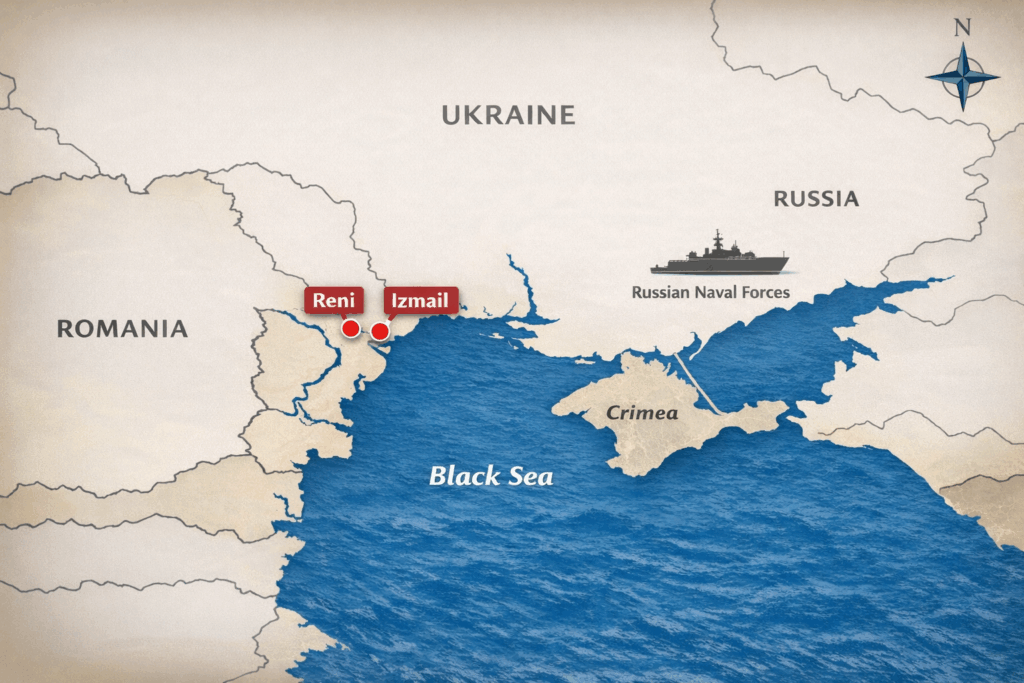
On 5 July 2023, a bulk carrier vessel (the “Vessel”) was chartered by the Owners to a commodity company (“Charterers”) for the carriage of corn from the Ukrainian ports of Izmail or Reni (at the Charterers’ discretion) to a nominated port on the East Coast of Italy.
The charterparty incorporated:
● BIMCO Synacomex 2000 proforma terms
● Voywar 1993 (as incorporated in Clause 27 of Synacomex 2000) governing war risks
● An express provision placing Extra War Risk Insurance (“EWRI”) costs on Owners’ account
The original laycan of 15–20 July 2023 was subsequently amended by an addendum on 17 July 2023 to 24–28 July 2023 due to the Vessel’s delayed departure from dry dock.
II. The Geopolitical Trigger
The timing of this charterparty proved critical. On the same day the addendum was agreed (17 July 2023), Russia announced its withdrawal from the Black Sea Grain Initiative. That UN-brokered agreement had provided a measure of protection for grain shipments from Ukrainian ports since July 2022.
As a result, the consequences were immediate and significant. Here is a summary of events:
| Date | Event |
| 17 July 2023 | Russia withdraws from Black Sea Grain Initiative |
| 18-19 July 2023 | Russian missile attacks on Odessa and Chornomorsk |
| 19 July 2023 | The Russian Defence Ministry declares that all vessels sailing to Ukraine will be considered “potential carriers of military cargo” |
| 23 July 2023 | First missile attack on the Port of Reni |
| 24 July 2023 | First missile attack on the Port of Izmail; Owners notify Charterers of cancellation |
On 24 July 2023, the Owners communicated their refusal to proceed. They cited the drastic escalation in danger and the insurers’ refusal to provide coverage. The Charterers rejected this cancellation and, by way of mitigation, chartered a substitute vessel at a higher freight rate.
III. The Claim and the Parties Positions in Brief
The Charterers alleged anticipatory breach, arguing that the Owners’ decision not to procure war risks cover at the beginning of the charterparty (and their decision to defer cover pending clarity on an Ukraine itinerary) showed that the Owners never intended to perform the voyage to Ukraine. They claimed damages equal to the difference between the original contracted freight rate and the higher rate that they had to pay for the substitute vessel.
However, the Owners denied breach. They relied principally on (i) the safe port warranty, which limits the Charterers’ entitlement to insist on the nominated ports, and (ii) Voywar 1993, which permits refusal and termination where performance would expose the vessel, cargo, and crew to war risks.
IV. Legal Issues Before the Tribunal
Accordingly, the arbitration turned on three principal questions:
- The escalation of risk question: Was there a material escalation in the prospective risk faced by the Vessel in sailing to Reni and Izmail on 24 July 2023 compared to 17 July 2023?
- The assumption of risk question: On a true construction of the charterparty, did the Owners assume the risks involved in sailing to these ports on 24 July 2023, or did their refusal constitute an anticipatory breach?
- The exercise of discretion question: Did the Owners credibly exercise their contractual discretion under the Voywar 1993 clause?
Analysis and Findings: Voywar 1993 Termination
I. Escalation of Risk: The Tribunal’s Core Finding
In the Award, the Tribunal found unequivocally that there was a material escalation in risk between 17 July and 24 July 2023.
In particular, several factors supported this conclusion:
- Prior to 17 July 2023, neither Reni nor Izmail had been targeted by Russian missiles since the onset of hostilities in February 2022
- The ports’ geographical location (on the Danube River, near NATO member Romania) had created a reasonable expectation of relative safety
- Russia’s withdrawal from the Black Sea Grain Initiative represented a shift under which the grain trade moved from being tolerated and protected under the Initiative to being specifically targeted by Russian forces.
- The 23 July 2023 attack on Reni shattered the “illusion” that these ports were too close to NATO territory to be targeted
Critically, cross-examination evidence influenced the Tribunal, including an acknowledgment from a Charterers’ witness that Reni and Izmail had been regarded as comparatively safe because of their proximity to the Romanian border and NATO territory, and that an attack so close to NATO had not been anticipated.
The Tribunal also noted that an official from the Reni and Izmail harbour authority, another Charterers’ witness, stated under cross-examination that the commencement of bombing on 23 July 2023 increased the risk compared to 17 July 2023, and that once Reni was attacked, attacks on Izmail were expected.
Although the Black Sea Grain Initiative did not formally cover Reni and Izmail, the Tribunal considered that it provided indirect protection by signalling Russia’s general tolerance of the grain trade. Its collapse triggered a qualitative change in the risk profile of Ukrainian grain ports.
II. Assumption of Risk: The Contractual Allocation Framework
The Charterers argued that by entering into a charterparty for a voyage to Ukrainian ports during an ongoing war, the Owners had assumed the inherent risks and could not later rely on those same risks to escape their contractual obligations.
The Tribunal considered the established authorities on pre-assumed war risks:
- The Mary Lou [1981] 2 Lloyd’s Rep. 272 (Mustill J): Safe port warranties operate as limits on a charterer’s entitlement to insist on named ports
- The Product Star (No. 2) [1993] 1 Lloyd’s Rep. 397 (Leggatt LJ): Owners may refuse performance if the danger has become “different, either in nature or extent” from the risk undertaken at the time of contracting
- The Polar [2024] 1 Lloyd’s Rep. 85 (Hamblen LJ): Owners accepting risk at the date of the charter are accepting that “in the circumstances prevailing at the date of the charter the risks of proceeding there were not such as would render their discretion exercisable”
The Tribunal also observed an important nuance regarding the allocation of war risk insurance costs. In cases such as The Paiwan Wisdom [2012] 2 Lloyd’s Rep. and The Helen Miller [1980] 2 Lloyd’s Rep. 95, charterparty provisions requiring charterers to bear additional war risk premiums have been interpreted as the “price” charterers pay for insisting on orders that owners would not otherwise accept.
However, the Owners bore the cost of Extra War Risk Insurance (EWRI). The Tribunal found this factor less instructive on the facts, reasoning that in a single-voyage charter to a known war zone, the cost of war risk insurance was likely “baked into” the agreed freight rate.
The Charterers also contended that the crew’s reluctance to proceed to the Ukrainian ports meant the Vessel was unseaworthy. The Tribunal rejected this point, noting it was raised only in the Charterers’ closing submissions (and was unpleaded).
On that basis, the Tribunal concluded that the Owners assumed only the level of risk as it existed on 17 July 2023; the escalation culminating in direct attacks on the nominated load ports fell outside the scope of any assumed risk.
III. Exercise of Discretion: The Voywar 1993 Clause
Clause 27 of the charterparty incorporated the Voywar 1993 standard clause, which provides owners with a broad discretion to refuse performance if, “in the reasonable judgment” of the Master and/or Owners, the voyage “may expose, or is likely to expose” the vessel, cargo, or crew to war risks.
The Charterers challenged the Owners’ exercising of this discretion on multiple grounds:
(a) The Standard for Unreasonableness
The Tribunal applied a well-established test from The Product Star (No. 2):
The discretion must be exercised “honestly, and in good faith” and must not be “arbitrary, capricious or unreasonable.”
Importantly, the threshold for unreasonableness is high. It is insufficient for a charterer to show that many (or even most) reasonable shipowners would have reached a different conclusion. The question is whether there was “material on which a reasonable shipowner could have reached that conclusion”: The Product Star (No. 2) at 407.
On the evidence, it was satisfied that Russia’s withdrawal from the Black Sea Grain Initiative and the direct targeting of Reni and Izmail on 23–24 July 2023 provided ample material for a reasonable shipowner to conclude that the ports were too dangerous.
(b) The “Normal Characteristic” Test
The Tribunal also considered the “safe port” dimension of the analysis, applying the test from The Saga Cob [1991] 2 Lloyd’s Rep. 398:
- The relevant inquiry is whether the likelihood of a particular risk occurring is such as to amount to a “normal characteristic of that port.”
The Tribunal found that direct targeting by Russian missiles was not a “normal characteristic” of Reni or Izmail prior to 24 July 2023. The ports had operated without incident since the onset of hostilities, and the commencement of attacks represented a fundamental change in their risk profile.
(c) Adequacy of Enquiries
The Charterers argued that the Owners acted unreasonably by failing to consult the Harbour Master at Reni and Izmail before cancelling. The Tribunal rejected this argument, applying Triton Lark [2012] 1 Lloyd’s Rep. 151:
- If a shipowner fails to make all necessary enquiries, the resulting judgment is unlikely to be considered unreasonable “if it was in fact an objectively reasonable judgment” and would have been shown to be so had all necessary inquiries been made.
The Tribunal found that the Owners did consult with their local agents in Sulina, Reni, and Izmail. Moreover, the official from the harbour authority stated in cross-examination that he had no particular insight into when or whether the ports may be targeted, so any advice he might have provided would have been speculative.
(d) The 48-Hour Notice Requirement
The Charterers contended that under Voywar 1993, the Owners were required to provide 48 hours’ notice to allow the Charterers to nominate an alternative safe port.
Therefore, the Tribunal carefully construed Clause 27(b), which provides:
“…if this Charter Party provides that loading or discharging is to take place within a range of ports…the Owners shall first require the Charterers to nominate any other safe port which lies within the range…”
The Tribunal found that the charterparty did not provide for a “range” of load ports. It specified two named ports, Reni or Izmail, in Charterers’ option (i.e., the Charterers could elect which of the two would apply). Two specific alternatives do not constitute a “range” within the meaning of the clause. Accordingly, the 48-hour notice requirement did not apply.
Accordingly, the Tribunal held that the Owners validly exercised their Voywar 1993 discretion and that the 48-hour re-nomination mechanism was not engaged because two named alternative load ports did not constitute a “range of ports” on these facts; the 24 July 2023 cancellation notice therefore amounted to “due fulfilment of the Charter Party” under Clause 27(f).

The Award
The Tribunal dismissed the Charterers’ claim in its entirety, finding:
- There was a material escalation in risk between 17 July and 24 July 2023
- The Owners had not assumed the level of risk that prevailed on 24 July 2023
- The Owners validly exercised their discretion under Voywar 1993
- The Charterers’ anticipatory breach and unseaworthiness arguments failed
The Charterers were ordered to bear their own costs, pay the Owners’ recoverable costs, and pay the cost of the Award.
Practical Implications for the Shipping Industry
In summary, this award offers several valuable insights:
For Shipowners
- Document your risk assessment: The Tribunal placed weight on the Owners’ contemporaneous risk assessment and enquiries (including engagement with local agents) when assessing reasonableness.
- Monitor geopolitical developments continuously: Where war risks are known at fixing, the critical question becomes whether circumstances have become materially different in nature or extent compared with the contractual baseline.
- Understand the Voywar 1993 mechanics: The clause provides robust protection, but its proper invocation requires demonstrable material change in risk.
For Charterers:
- Be cautious with named ports in conflict zones: The protective effect of safe port warranties is limited where circumstances materially deteriorate. Where the charter names two or more alternative load ports and the Charterers merely choose between them, Voywar’s “range of ports” re-nomination mechanism may not be triggered.
- Consider the implications of war risk allocation: Placing EWRI costs on the owners’ account may not automatically transfer the underlying operational risk.
For Legal Advisors and Claims Handlers:
- The “escalation” test is paramount: Where war risks are pre-assumed, the focus shifts to whether circumstances have become “different, either in nature or extent”.
- The discretion threshold is high: To defeat an Owners refusal based on Voywar, it is not enough to show other owners might have proceeded to the port in question; the focus is whether there was material on which a reasonable owner could decide as these Owners did.
- Clause construction is critical: Small drafting choices (named ports vs a true “range”) can determine whether notice / re-nomination obligations arise.
Conclusion
This award stands as an important authority on the interplay between safe port warranties, war risk clauses, and geopolitical volatility. The Tribunal’s careful analysis of the temporal dimension of risk assessment, focusing on the critical seven-day window during which Russia’s posture toward Ukrainian grain exports shifted dramatically, provides a roadmap for evaluating similar disputes in the future.
Overall, the award is a strong reference point for Voywar 1993 termination in volatile geopolitical conditions. As the global shipping industry continues to navigate increasingly complex geopolitical risks, this award underscores the importance of robust contractual protections, diligent risk monitoring, and timely, well-documented decision-making.
Interwits was pleased to have acted in the matter and to see the Tribunal confirm the proper construction of Voywar 1993 in these circumstances. If you would like advice on war risk clauses, safe port disputes, or charterparty termination, our team can assist.
This legal brief is provided for informational purposes only and does not constitute legal advice. For specific guidance on maritime disputes or charterparty matters, please contact Interwits via our Contact page